The role function in the information model of the human psyche is a mask that a person puts on himself when he gets into new social conditions for himself and trying to adapt to them. A person uses such a mask when he wants to show himself in the best light and succeed.
The role function is an indicator of social success in society. If others evaluate your actions positively, then you are successful. If they criticize, then you do not cope well with your task of socialization - hence the resentment and bad mood.
Each personality type has its own ideas about how to appear and each has its own standard of social behavior. Since ideas about the ideal are always formulaic, a person does not know how to act beyond this template. Playing the role constantly is not easy, it does not lead to the desired result and often a person later complains that no one appreciates him.
The information model in socionics determines which aspect fills the role function in each personality type.
Consider the manifestations of role-playing for all possible aspects.
Experiential Sensing are a role function in
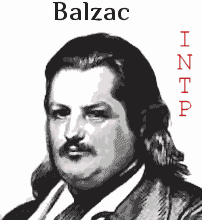
Balzac and
Yesenin. White Sensing is our own sensations, which are manifested in appearance and the ability to create comfortable conditions for ourselves. People with role-playing
Si try to prove themselves in this area, although it does not always work out well.
Yesenin strives to look good and decorate his house, and Balzac wants to provide himself with the necessary amenities that will allow him to exist normally. Both can cook delicious dishes for guests and dress fashionably, but after seeing off guests, they will not try for themselves. Cooking for yourself is long and boring, and there is no one to evaluate the appearance.


Role Extraverted Ethics, aka black Ethics (Fe) or "Ethics of Emotions"
The Emotive Ethics is a role-playing in
Jack London and
Stirlitz. Black Ethics is the ability to correctly express emotions and these emotional manifestations to influence and manipulate people.
Role-playing Black ethics try to seem cheerful in an unfamiliar company, but their emotions are too straightforward and often out of place, although they attract initial attention in the team. However, seeing these same people among loved ones or at work, you will notice how focused and quiet they are compared to the behavior at parties.

Role-based introverted logic, aka White Logic (Ti) or "Structural Logic"
The Structural Logic is role-playing in
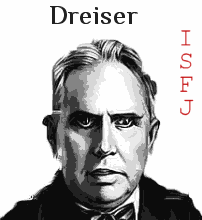
Dreiser and
Dostoevsky. White Logic is responsible for understanding formal rules and relationships. Any object is perceived as a hierarchical system with its own patterns.
In an unfamiliar environment, role-playing white logicians try to adhere to certain formalities and rules, to do everything "as it should be", as the law dictates. At the same time, they try to give the impression of reasonable and logical people for which they operate with pre-prepared arguments. However, it is difficult to adhere to logical reasoning for a long time and go beyond what they have prepared, so all their conclusions can lead to nothing.

Role-playing extraverted sensory, aka Black Sensing (Se) or "Volitional Sensing"
Role-playing Black sensors like to pretend to be a strong and determined person who can become a leader and fight back. But if you have to do this for a long time, they often exhale and fall. But, if this is not associated with great effort (for example, in the position of the boss), such people defiantly command and play a tough leader out of themselves, often going too far. Both Don and Huxley are stubborn and unyielding to others, but at the same time not demanding enough of themselves. They do not like to be responsible for their words and are often optional.
Role-based introverted intuition, aka White Intuition (Ni) or "Temporal intuition"
The Temporal intuition is a role in
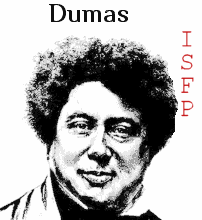
Dumas and
Gabin. White Intuition is responsible for the ability to predict the course of events, so wearing such a mask people try to look punctual, remember important things and like to make various predictions.
However, they can easily spend other people's time, they do not pay attention to the unpunctuality of others, and their predictions in most cases do not come true, since they are based on superficial and template representations. Role-playing is far from
a base functionthat can take into account all the factors and draw the right conclusions regarding the development of events.

Role Extraverted Logic, aka Black Logic (Te) or "Practical logic"
Practical logic is a role-playing in
Hume and
Hamlet. Black Logic is responsible for understanding the sequence of actions - "what and in what order you need to do in order to spend less effort, time and resources on it."
Role-playing Black logicians believe that people should not be idle. They try to impress people who are active and business-like who are well versed in business and economics. At the same time, they cannot calculate their strength and when it comes to daily routine work aimed at the final result, their entire mood disappears. Choosing the wrong sequence of actions, they quickly get tired and often do not finish what they started.

Role Introverted Ethics, aka White Ethics (Fi) or "Relational Ethics"
Relational Ethics is role-playing in
Robespierre and
Maxime. White Ethics is responsible for evaluating people's relationships and manipulating those relationships. In addition, it regulates empathy for others and moral evaluation of actions.
Role white ethics at the first acquaintance seem to be tactful polite people, pleasant in communication. They try to be well-mannered and observe etiquette. But they cannot understand the intricacies of relations between people and even more so influence these relations.
Both simplify the relationship, as they do not understand all the subtleties, and are often offended by unexpected developments for them. Robespierre replaces the concept of "ethical" with the concept of "fairly", and in Max relationships with others are determined by mutual obligations.

Extraverted intuition, aka Black Intuition (Ne) or "Intuition of possibilities"
Intuition of possibilities is a role function in
Zhukov and
Napoleon. Black Intuition is responsible for the ability to see the potential of any idea or person, as well as for the ability to make the right choice from equivalent options.
Role-playing Black intuitives try to give the impression of a person who is far-sighted and reasonable, who knows everything about everyone. They like to talk about their influence and coolness, often lying and starting to believe it themselves. However, faced with the first difficulties, they forget about their plans and begin to look for a way out of the situation.
They may be the first to offer an original idea or a way to solve problems, but this will not always be the best option. All because they analyze the situation superficially, since they collect information from the first available sources without bothering to verify the truth, so they often believe various rumors.